In Narragansett, Two Houses on the Same Pond Can Face Two Different Cesspool Rules
September 3, 2026
September 3, 2026
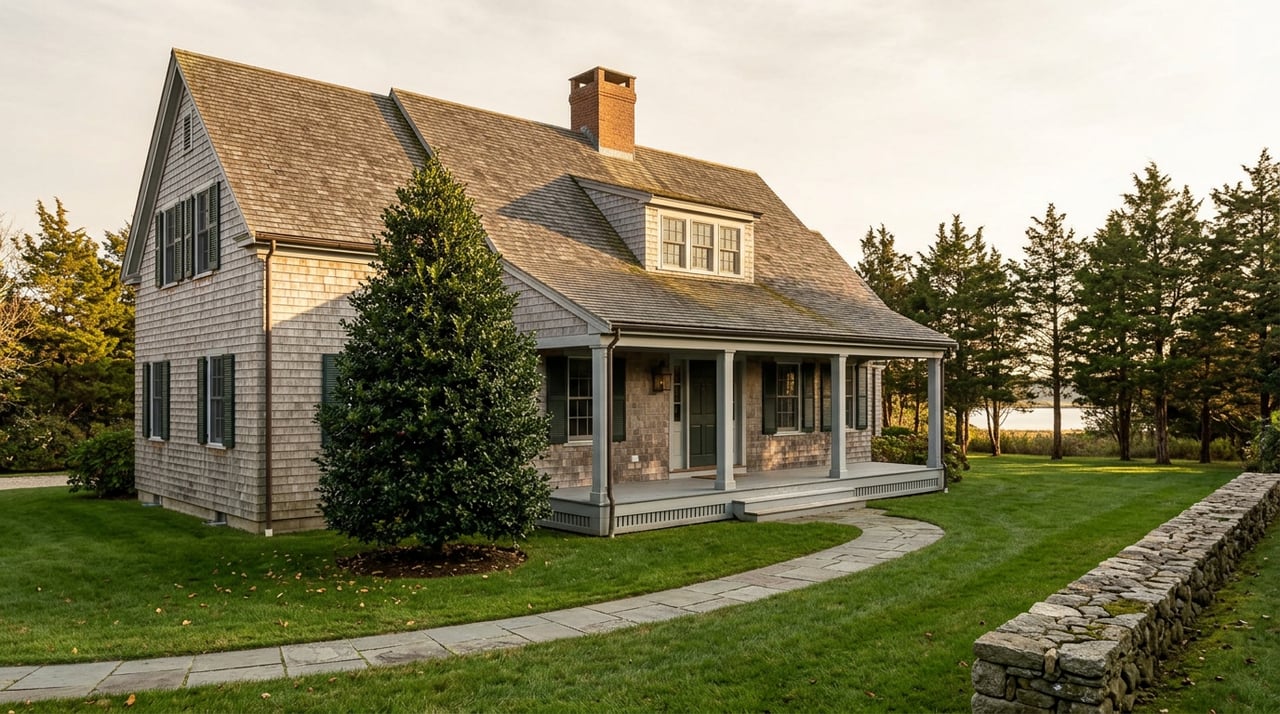
Picture two homes on Point Judith Pond, close enough that a kayaker could paddle between their docks in the same afternoon. One sits on the pond's eastern shore. The other sits on Great Island, technically part of the same body of water. Under Rhode Island's cesspool law, these two homes answer to different rules. Not because of price, age, or condition. Because of where the state drew a line on a map decades ago, and that line still runs through Narragansett today.
If you're buying or selling near the water here, that line matters more than square footage.
Rhode Island's Cesspool Act, passed in 2007 and amended in 2015, set a simple mechanism in motion: when a property with a cesspool changes hands, the clock starts. Any cesspool serving a home that closes on or after January 1, 2016 must be removed from service within one year of that closing date, replaced with a modern septic system or connected to a sewer line if one is available.
The law is deliberately silent on who pays. Rhode Island's Department of Environmental Management has been clear that the upgrade is a matter for negotiation between buyer and seller, not something the statute assigns to one side automatically. In practice, that means the cost of a cesspool becomes a bargaining chip the moment an offer gets written, whether either party has thought about it yet or not.
There's one carve-out worth knowing: transfers into a trust where a beneficiary is a close family member don't trigger the requirement. A sale to an unrelated buyer does, every time.
Some Narragansett properties don't get to wait for a closing date at all. Under the same law, any cesspool within 200 feet of the inland edge of a tidal shoreline, or within 200 feet of a water body used for public drinking supply, was already required to be replaced regardless of sale, with a compliance deadline of January 1, 2014. Any cesspool still operating in one of those zones today is already out of compliance with state law, sale or no sale.
That distinction, sale-triggered versus zone-triggered, is the first thing worth sorting out before you get attached to a listing.
| Situation | What triggers replacement | Deadline |
|---|---|---|
| Property sale or transfer (any location) | Closing date | Within 1 year of closing |
| Within 200 ft of tidal shoreline | Location alone, no sale needed | Already required, deadline was Jan 1, 2014 |
| Within 200 ft of a drinking water intake | Location alone, no sale needed | Already required, deadline was Jan 1, 2014 |
| Failed cesspool (backup, high liquid level, etc.) | Inspection finding | Within 1 year of failure, sooner if urgent |
Here's where Narragansett gets its own wrinkle. The Coastal Resources Management Council's Salt Pond Region Special Area Management Plan, the state's framework for managing groundwater impacts around the south shore's salt ponds, imposes a stricter standard in parts of town. Properties inside the plan's boundary that need a cesspool replaced, whether because of a sale or a failure, must install a nitrogen-reducing system rather than a conventional one. Those systems cost meaningfully more, and they require ongoing maintenance and inspection that a standard septic system doesn't.
The plan's boundary extends to only a small portion of Winnapaug Pond, part of the eastern shore of Point Judith Pond in Narragansett, and much of Wakefield along the Saugatucket River. Great Island and Harbor Island, both sitting in the same pond, are explicitly excluded from that boundary.
So a home on the eastern shore and a home on Great Island can be separated by open water and nothing else, and still land on opposite sides of a cost difference that can run into the tens of thousands of dollars if a cesspool ever needs replacing. This isn't a hypothetical for older homes near the pond. It's the actual overlay a title search or a pre-offer conversation with a septic contractor needs to catch.
Separate from all of this, Narragansett has run its own maintenance ordinance since 1992: every septic system in town, cesspool or otherwise, must be pumped at least once every four years, tracked through the town's own reporting system. That rule applies regardless of which side of the CRMC boundary a property sits on. If a seller can't produce pumping records, or if the town's tracking system shows the system is overdue, that's a separate conversation from the cesspool phase-out timeline, and one a buyer's inspector should be asking about directly.
DEM's own estimate for a conventional cesspool-to-septic conversion runs $10,000 to $15,000. That number changes fast once a nitrogen-reducing system enters the picture, since those systems use more complex technology and require the kind of ongoing testing a standard system doesn't. Industry estimates for advanced systems have run as high as $30,000 depending on lot size, soil conditions, and proximity to the water.
None of that is a fixed cost buried in fine print. It's a live number that shows up in negotiations, and it should show up before an offer gets written, not after a home inspection surfaces it as a surprise. Coastal inventory in Narragansett has eased compared to the tightest years of the recent market, which gives buyers more room to ask for credits or repairs than they had when every listing drew multiple offers. A cesspool sitting inside the 200-foot zone, or inside the Salt Pond boundary, is exactly the kind of item worth putting on that list.
Rhode Island's standard real estate disclosure form gives buyers a specific ten-day period to inspect a property's sewage system and determine whether a cesspool is present and whether it falls under the phase-out requirements. This is separate from a general home inspection, and it's easy to let it pass unused if a buyer assumes the general inspector already covered it.
"Purchasers should consult chapter 19.15 of title 23 for specific cesspool abandonment or replacement requirements."
That's the language sellers are required to hand buyers under state law. It's worth reading literally, not skimming, and it's worth pairing with an actual septic inspection rather than assuming the general home inspector checked the box. The Rhode Island General Assembly was still refining this exact disclosure language in its 2026 session, which is a sign the state considers the notice requirements unfinished business, not settled law.
Buyers comparing Narragansett against neighboring towns should know the patchwork gets wider once you leave town lines. Charlestown, South Kingstown, and Block Island have all gone further than the state law, adopting local ordinances that require replacement of every cesspool in the community over time, not just the ones inside a 200-foot zone. A property that looks like it's grandfathered under state rules in one town may not be grandfathered at all once you cross into the next one.
Does a cesspool automatically fail a home inspection in Narragansett? No. A cesspool itself isn't automatically a failed system. It becomes a compliance issue at the point of sale, or immediately if it sits inside one of the state's 200-foot zones.
If I inherit a Narragansett property with a cesspool, does the law apply to me? Transfers to a trust with a close family beneficiary are exempted. A standard inheritance to an unrelated party still triggers the one-year replacement clock.
Can a seller just leave the cesspool for the next buyer to deal with? The obligation follows the property, not a particular owner. If a system isn't upgraded within a year of closing, the requirement carries forward to whoever owns the property at that point.
None of this is a reason to avoid a home near Point Judith Pond or anywhere else along the Narragansett coast. It's a reason to ask the right question before an offer goes in, not after. If you're weighing a purchase or a listing near the water and want to walk through what your specific address falls under, Steven Sitrin is glad to help you sort it out. Let's Connect.
Stay up to date on the latest real estate trends.






Whether you're buying your first coastal home, selling a luxury property, or investing along the Rhode Island and Massachusetts coastline, Steven Sitrin delivers personalized guidance, innovative marketing, and a client-first approach designed to help you achieve your real estate goals with confidence.