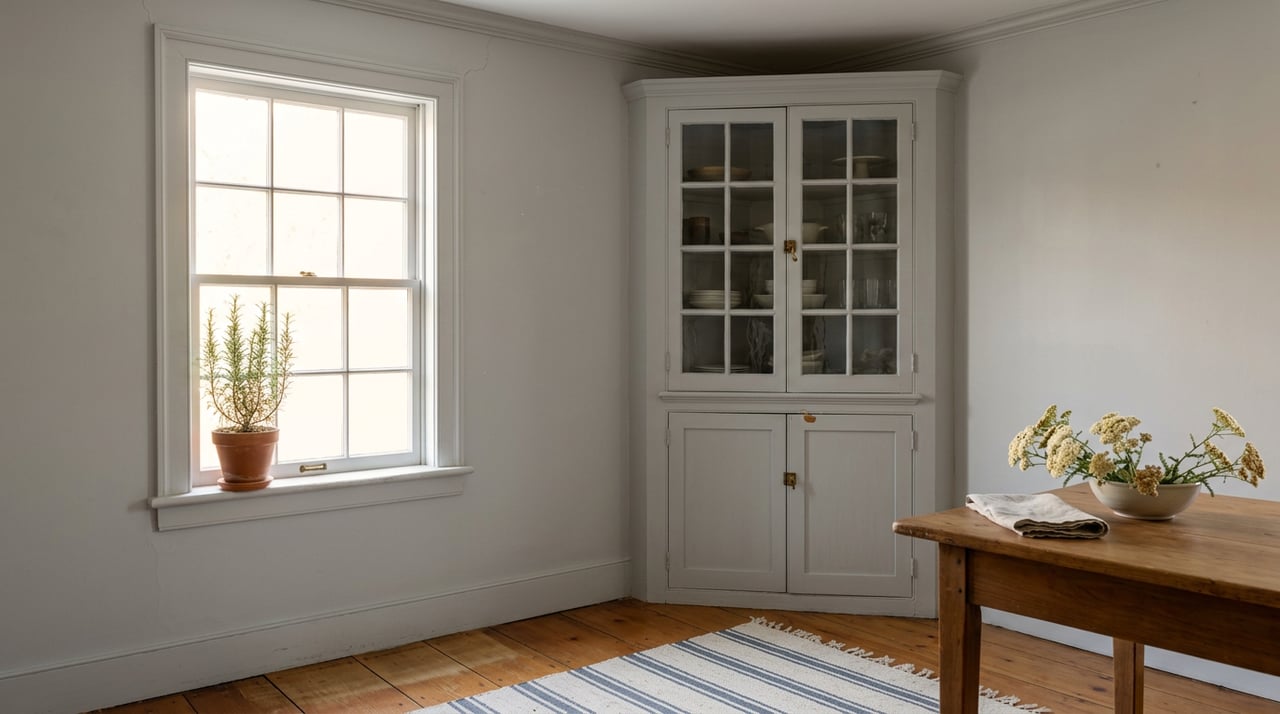
Why Jamestown's Median Home Price Isn't the Number You Think It Is
August 27, 2026
August 27, 2026
In the first days of June 2026, a waterfront estate on Coulter Street sold for $6.5 million. Four months earlier, in February, a two-bedroom ranch on Starboard Avenue closed for $610,000. Both are real transactions, both closed within the same year, and both happened on the same nine-mile-long island. If you were tracking Jamestown's "median home price" across that stretch, you would have watched it lurch from one extreme to the other depending on which month you happened to check.
That is not a data error. It is what happens when a market this small gets run through statistics built for markets that are not.
Jamestown sells very few homes in any given month. In January 2026, one national portal recorded exactly one closed sale on Conanicut Island, at a reported median of $650,000, a figure the same portal described as down more than 60 percent from the year before. That comparison sounds like a crash. It is actually just what a one-home sample does to a percentage. A single ranch selling for a few hundred thousand dollars can look identical, statistically, to an entire market cooling off.
This is the part that gets lost when buyers compare towns using portal dashboards. Zillow's home value index for Jamestown showed values up over the same period. Another portal showed list prices moving in a third direction entirely. None of these sources are lying. They are measuring different things, at different points in a very shallow pool, and reporting the result with the same confident percentage sign you would use for a market that closes hundreds of homes a month. Newport or Providence can absorb an outlier sale without the town-wide number flinching. Jamestown cannot. Every closing is a meaningful share of the total, which means every closing bends the average.
The clearest way to see this is not through a single monthly figure but through the actual string of closings recorded across Newport County's weekly transaction reporting over the past several months.
| Month (2026) | Address | Style | Sold Price |
|---|---|---|---|
| February | 8 Starboard Avenue | Ranch | $610,000 |
| March | 382 Beavertail Road | Ranch | $785,000 |
| March | 44 Mast Street | Colonial | $935,000 |
| June | 14 Clinton Avenue | Up/Down Multi-Family | $2,500,000 |
| June | 30 W Bay View Drive | Contemporary | $2,630,000 |
| June | 10 Coulter Street | Colonial (waterfront estate) | $6,500,000 |
| July | 14 Hulls Court | Contemporary/Cottage | $1,200,000 |
| July | 585 Seaside Drive | Ranch | $2,600,000 |
| August | 456 Schooner Avenue | Colonial | $995,000 |
| August | 4 Intrepid Lane | Colonial | $1,100,000 |
| August | 65 Blueberry Lane | Bungalow | $2,500,000 |
Look at any two adjacent rows and you can see the problem. In August alone, a colonial on Schooner Avenue closed for $995,000 in the same stretch that a bungalow on Blueberry Lane closed for $2.5 million, a two and a half times difference between homes sold in the same town in the same two weeks. Average those together and you get a number that describes neither property. That is the arithmetic every monthly "median" for Jamestown is quietly doing, just with fewer data points to smooth it out.
The Coulter Street sale is worth understanding on its own terms, because it explains why lumping waterfront estates and inland ranches into one town-wide figure obscures more than it reveals. The property, known as Bridge View, is a 6,000-square-foot shingle-style home completed in 2020 on two-thirds of a waterfront acre, with 180-degree views of Narragansett Bay and the Newport and Mount Hope bridges. It has six ensuite bedrooms, an elevator, a heated three-car garage, a separate guest carriage house, direct beach access, and a private mooring. It sold for the highest price recorded in Jamestown in 2026 to date, and the highest since August 2025, brokered on the seller's side by Bob Bailey of Lila Delman Compass.
One of the brokers involved in the sale, Alexandra Thursby of Mott & Chace Sotheby's International Realty, described the dynamics behind it plainly.
"With coastal inventory exceptionally scarce, securing premium real estate requires immediate, decisive action."
That comment is accurate, but it describes a specific segment of the market: turnkey, waterfront, architect-built. It says nothing about what a buyer competing for the $935,000 colonial on Mast Street should expect, because that is a different pool of buyers, a different set of comparable properties, and a different pace entirely. Treating Jamestown as one market with one median erases that distinction. Treating it as several small, distinct pockets, waterfront estates, inland colonials, older ranches, restores it.
If a single monthly median cannot be trusted in a market this thin, the alternative is not to give up on data. It is to look at the right slice of it.
This matters just as much for sellers as it does for buyers. Pricing a home against a town-wide median that happens to include a $6.5 million outlier, or happens to be dragged down by one modest ranch, sets an expectation that has nothing to do with what your specific property will actually draw. The comparable sales in your own pocket of the island are a far more honest starting point than any single number a portal serves up.
Is Jamestown a buyer's market or a seller's market right now? Neither label fits cleanly, because the answer depends on the segment. Coastal, turnkey properties have continued to draw fast, decisive offers. Homes that need work or sit outside the waterfront pocket have more room for negotiation, particularly as the market moves into its typical late-summer lull.
Why do different real estate websites show different numbers for the same town? Because they are measuring different things, list prices versus sold prices, home value estimates versus actual closings, and pulling from samples so small that a single transaction shifts the result. None of the numbers are necessarily wrong. They are just answering different questions.
How many homes actually sell in Jamestown in a typical month? It varies, but the count is small enough that individual sales, rather than broad trends, tend to define whatever the town-wide figure shows in any given month.
If you are trying to make sense of what a home in Jamestown is actually worth, whether you are buying your first place on the island or deciding when to list one, the town-wide number on any portal is a starting point at best. The real answer lives in the comparable sales for your specific pocket of Conanicut Island, and that is the kind of read that comes from watching the local market closely, not from a monthly average. If you would like to talk through what the recent sales in your part of Jamestown actually suggest, Steven Sitrin would welcome the conversation. Let's Connect.
Stay up to date on the latest real estate trends.



Whether you're buying your first coastal home, selling a luxury property, or investing along the Rhode Island and Massachusetts coastline, Steven Sitrin delivers personalized guidance, innovative marketing, and a client-first approach designed to help you achieve your real estate goals with confidence.